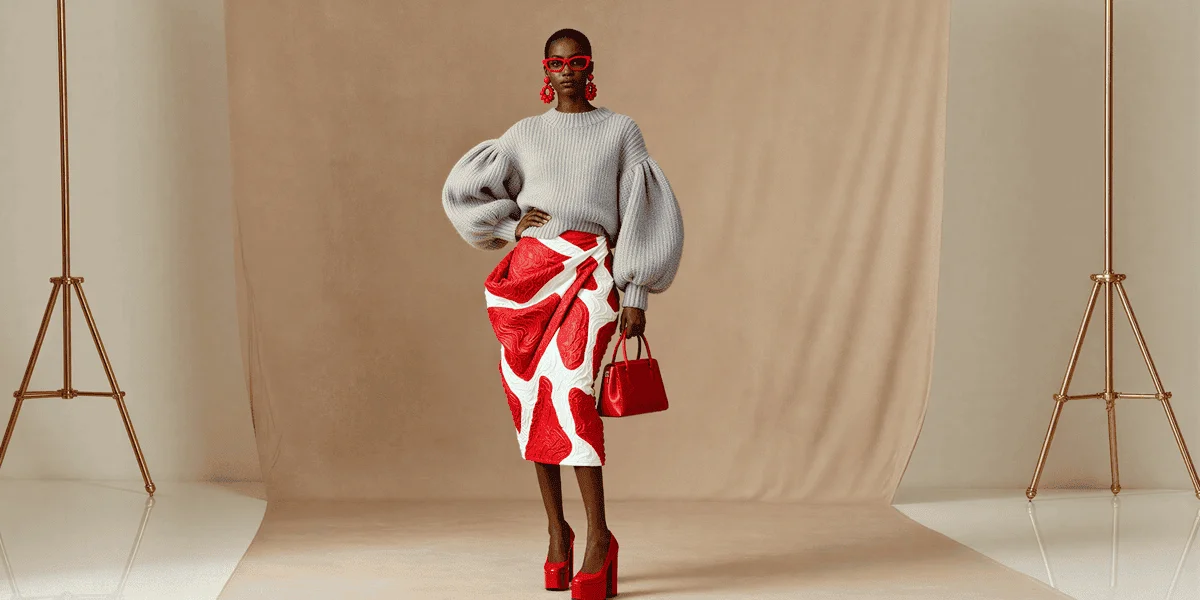
Becoming a fashion influencer on Instagram requires choosing a specific style sub-niche, creating consistent visual content through Reels and carousels, growing an engaged audience of 1,000+ followers, and monetizing through affiliate platforms like LTK, ShopMy, or brand partnerships. Fashion is the most searched category on Instagram, accounting for 12% of all searches (SQ Magazine, February 2026). Nano fashion influencers with 1K-10K followers earn $100-$500 per sponsored post, scaling to $1,000+ at 10K-50K followers.
You scroll Instagram for outfit inspiration every morning. You screenshot looks you like. You know which trends are hitting and which ones peaked two months ago.
But you’re watching other people post the outfits. Other people getting the brand deals. Other people making money from fashion content.
Here’s what’s stopping most aspiring fashion influencers: not talent, not style, not even followers. It’s not knowing where to start and in what order.
This guide breaks it down into 6 concrete steps. No vague “be authentic” advice. No “post consistently and the algorithm will find you.” Specific actions, realistic timelines, and the monetization playbook fashion creators are using right now.
TL;DR
- Fashion is Instagram’s #1 searched category - 12% of all searches, with a 1.59% average engagement rate (higher than most niches)
- Pick a sub-niche first - “Fashion” is too broad. Thrift flips, capsule wardrobes, workwear, plus-size styling, or luxury dupes all have dedicated audiences
- Reels are non-negotiable - 55% of Reels views come from non-followers, making them the fastest discovery format
- Monetize from day one - Join LTK or ShopMy before hitting 10K followers. Affiliate commissions (10-30%) start earning immediately
- Brand deals start smaller than you think - Nano influencers (1K-10K followers) earn $100-$500 per sponsored post
- Automate outfit link requests - Fashion posts generate more “link?” comments than any other niche. DM automation saves 3+ hours per post
Why Fashion Influencing Is Worth Starting Now
The fashion influencer marketing market was valued at $6.82 billion in 2024 and is projected to reach $39.72 billion by 2030, growing at 33.8% annually (Grand View Research, accessed February 2026). Fashion accounts for over 30% of all influencer marketing spend.
That’s not hype. That’s where advertising budgets are going.
Three things make fashion content uniquely valuable on Instagram:
Discovery potential is massive. Instagram Reels generate over 200 billion plays per day, with 55% of views coming from non-followers (Blogging Wizard, accessed February 2026). Fashion content performs even better than average because it’s highly visual, shareable, and searchable.
Monetization paths are wide open. Unlike niches that rely on a single revenue stream, fashion influencers earn from affiliate links (LTK, ShopMy, Amazon), brand sponsorships, digital products (style guides, lookbooks), and even product lines. You don’t need 100K followers to start earning.
Brands are actively looking for smaller creators. Over 63% of paid brand deals in 2025-2026 went to creators with under 10,000 followers (Instagram Creator Economy Report, accessed February 2026). If you’re worried about being “too small,” the data says otherwise.
Step 1: Pick Your Fashion Sub-Niche
“Fashion influencer” is not a niche. It’s a category. The creators who grow fastest pick a specific corner of fashion and own it.
Your sub-niche determines who follows you, what brands reach out, and how you monetize. Choosing the right one is the most important decision you’ll make. If you need help with this process, our guide to choosing your creator niche walks through it in detail.
High-Growth Fashion Sub-Niches
| Sub-Niche | Why It Works | Monetization Angle |
|---|---|---|
| Thrift/Vintage Flips | Low barrier, high entertainment value | Depop, Poshmark, affiliate |
| Capsule Wardrobes | Evergreen, solves real problem | Digital guides, brand collabs |
| Workwear/Corporate Style | Underserved, high purchasing power | Amazon, Nordstrom affiliates |
| Plus-Size Fashion | Passionate community, brand demand | Inclusive brand deals, LTK |
| Luxury Dupes | Viral potential, broad appeal | Amazon affiliate links |
| Streetwear | Strong subculture, collectible items | Resale platforms, brand drops |
| Sustainable Fashion | Growing movement, values-aligned | Ethical brand partnerships |
| Wedding/Event Styling | High-ticket, seasonal demand | Bridal affiliate programs |
| Men’s Fashion | Less saturated than women’s | Brand deal premium |
| Budget Fashion (Under $50) | Mass market appeal | High-volume affiliate clicks |
How to Validate Your Sub-Niche
Before committing, check three things:
-
Search volume exists. Type your niche into Instagram’s search bar. If autocomplete suggests it (e.g., “capsule wardrobe ideas”), people are searching for it.
-
Creators are making money in it. Find 5-10 accounts in your sub-niche with 10K-50K followers. Check if they use LTK links, tag brands, or sell digital products. If they’re monetizing, the niche supports it.
-
You can create 50+ pieces of content. Write down 50 post ideas in your niche. If you run out at 15, the niche is too narrow. If you can’t stop at 100, you’ve found your lane.
Step 2: Set Up Your Instagram Profile for Fashion
Your profile is your storefront. Fashion followers decide whether to follow within 3 seconds of landing on it.
Profile Essentials
Switch to a Creator account. Go to Settings > Account > Switch to Professional Account > Creator. This unlocks analytics, contact buttons, and eligibility for Instagram’s Creator Marketplace.
Username. Keep it clean, memorable, and searchable. Include a fashion-related keyword if possible. “StyleByMaria” beats “maria_xoxo_2003.”
Bio formula for fashion creators:
[What you post] for [who you serve]
[Your unique angle]
[Call to action]
Example: “Workwear styling for 9-to-5 creatives. Affordable outfits, zero boring basics. Comment OUTFIT on any post for links.”
Profile photo. A clear, well-lit headshot wearing something that represents your style. Not a logo (unless you’re a brand), not a landscape shot.
Link in bio. Use LTK or a link-in-bio tool to send followers to your affiliate storefront, latest posts, or featured outfits.
Grid Aesthetic
Your first 9 posts are your visual resume. For fashion content, this means:
- Consistent lighting (natural light or a specific editing preset)
- Consistent background (one location type you return to)
- Consistent framing (full-body, waist-up, or flat lays)
- Color coherence (your outfits should feel like they belong together)
You don’t need professional photography. An iPhone, good natural light, and a tripod are enough for the first 6 months.
Step 3: Create Content That Gets Discovered
Instagram’s algorithm rewards Reels above all other formats for reach. In 2025-2026, 58-62% of influencer campaigns use Reels as the primary format (Versa Creative, accessed February 2026).
For fashion creators, this means your content strategy should be Reels-first.
The 3 Content Pillars for Fashion Influencers
Pillar 1: Outfit of the Day (OOTD) / Try-On Content
- Show the full outfit with a reveal transition
- List every item (brand, size, price) in the caption
- Use 3-5 fashion hashtags + 2-3 niche-specific ones
- Post frequency: 3-4x per week
Pillar 2: Styling Tips / How-To Content
- “5 ways to style a white t-shirt”
- “How to dress for your body type”
- “Transition this outfit from day to night”
- This content performs well for Reels reach because it’s educational
- Post frequency: 1-2x per week
Pillar 3: Trend Reports / Recommendations
- “3 trends I’m wearing this spring”
- “Zara haul: what’s worth buying”
- “Amazon fashion finds under $30”
- This content drives the most affiliate clicks
- Post frequency: 1-2x per week
Reels Best Practices for Fashion
- Hook in the first 1.5 seconds. Start with the outfit reveal, not you talking to camera.
- Keep it under 30 seconds. Short-form performs best for fashion content.
- Use trending audio. Check the Reels tab weekly for sounds gaining traction.
- Text overlays matter. Many viewers watch without sound. Add item names and prices as on-screen text.
- Post at peak times. Fashion content performs best between 11am-1pm and 7pm-9pm on weekdays.
Carousels for Outfit Breakdowns
While Reels drive reach, carousels drive saves and shares. Use carousels for:
- Outfit breakdowns (slide 1: full look, slides 2-6: individual items with links)
- “Styled 5 ways” series
- Capsule wardrobe guides
- Seasonal trend roundups
Carousels have a 0.55% average engagement rate on Instagram, the highest of any format (Social Insider, accessed February 2026).
Step 4: Grow Your First 1,000 Followers
The first 1,000 followers are the hardest. After that, Instagram’s algorithm starts working for you instead of against you.
Here’s the growth playbook that works for fashion creators:
Weeks 1-4: Foundation (0 to 300 followers)
- Post 5x per week (minimum 3 Reels, 2 carousels or static posts)
- Engage for 30 minutes daily: comment on 20-30 accounts in your sub-niche
- Reply to every comment on your posts within 1 hour
- Use 15-20 hashtags per post (mix of broad: #fashioninspo and niche: #capsulewardrobe2026)
- Join 2-3 fashion creator engagement pods or communities
Weeks 5-8: Acceleration (300 to 700 followers)
- Increase Reels to 4-5 per week (algorithm rewards consistency)
- Start using Instagram Collabs feature with similar-sized creators
- Create “duet-style” content responding to larger creators’ trends
- Engage with followers of creators in your niche (they’re your target audience)
- Start an Instagram Story series (daily “what I’m wearing” or styling challenges)
Weeks 9-12: Crossing 1K (700 to 1,000+ followers)
- Analyze your top 5 performing posts and create more of that format
- Pitch your first micro-collaborations (gifted product in exchange for content)
- Cross-promote on Pinterest and TikTok (repurpose your Reels)
- Launch a weekly series (e.g., “Thrift Flip Fridays” or “Monday Work Outfit”)
For a more detailed daily breakdown, follow the 30-day creator launch roadmap and adapt it for fashion content.
Engagement Tactics That Work for Fashion
Reply to every “link?” and “where from?” comment. These are buying signals. Fashion posts generate more product inquiries than any other niche because every item in the photo is a potential purchase.
Once you’re getting 10+ link requests per post, automating your outfit link DMs becomes a time-saver. More on that in Step 6.
Use the question sticker in Stories. Ask “What should I style next?” or “Pick my Friday outfit.” This boosts Story engagement and gives you content ideas directly from your audience.
Respond to DMs personally (at first). Before you have automation, every DM conversation is relationship-building. Fashion followers who feel heard become loyal followers who share your content.
Step 5: Monetize Your Fashion Content
You don’t need 10K followers to start earning. Here are the monetization channels fashion influencers use, ranked by accessibility:
1. Affiliate Marketing (Start Immediately)
Affiliate marketing is the fastest path to fashion influencer income. You share links to products you wear, and earn a commission (typically 10-30%) on every purchase.
Top affiliate platforms for fashion creators:
| Platform | Commission Rate | Minimum Followers | Best For |
|---|---|---|---|
| LTK (LikeToKnow.It) | 10-25% | Apply (reviewed) | Fashion, lifestyle, home |
| ShopMy | 10-30% | Apply (reviewed) | Premium/luxury fashion |
| Amazon Influencer | 1-10% | Apply (reviewed) | Mass market, dupes |
| Shopify Collabs | Varies by brand | None | DTC fashion brands |
| ShareASale | Varies | None | Multi-brand access |
LTK remains the dominant platform for fashion creators, with over 150,000 creators and 5,000+ retail partners including ASOS, Net-a-Porter, and Nordstrom (LTK, accessed February 2026). If you post outfit content, LTK should be your first affiliate signup.
ShopMy is gaining traction for premium fashion content, offering higher commissions (10-30%) on luxury and mid-range brands (Creator Hero, accessed February 2026).
For a deeper comparison, see how creators automate LTK link distribution to save time on every post.
2. Brand Sponsorships (1K+ Followers)
Brand deals become realistic once you hit 1,000 engaged followers. Fashion brands prefer micro-influencers because they drive higher engagement and more authentic recommendations.
What fashion nano-influencers earn:
- Feed post: $100-$500
- Reel: $200-$750
- Story package (3-5 Stories): $50-$200
- Full campaign (multiple posts): $500-$2,000
(EmbedSocial Influencer Earnings Report, accessed February 2026)
Where to find brand deals:
- Instagram Creator Marketplace - Meta’s official matchmaking platform. Full setup guide here.
- Collabstr - 200K+ creators, instant payments, $50-$500 deals common
- Social Cat - Minimum 3K followers, gifted + paid collaborations
- Cold pitching - Email brands directly with your media kit and content examples
Our guide to landing brand deals under 10K followers has pitch templates and rate cards you can use immediately.
3. Digital Products (Any Follower Count)
Fashion knowledge is valuable. Sell:
- Style guides ($9-$29) - “Build a Capsule Wardrobe in 30 Days”
- Lookbooks ($5-$15) - Seasonal outfit collections with shopping links
- Styling templates ($5-$19) - Outfit formulas for specific occasions
- Courses ($49-$199) - “Find Your Personal Style” masterclass
Digital products have near-zero cost and infinite margin. Even with 500 followers, a well-positioned style guide can generate $200-$500/month.
4. Instagram Subscriptions & Badges
Instagram Subscriptions let followers pay $0.99-$9.99/month for exclusive content. For fashion creators, this could be early access to outfit links, behind-the-scenes styling sessions, or subscriber-only try-on content.
Badges during Instagram Live let viewers tip during try-on hauls and Q&A sessions ($0.99-$4.99 per badge).
For a complete breakdown of all 7 monetization methods, see our Instagram money-making guide.
Step 6: Automate Outfit Link Requests
This is where most fashion influencers hit a wall.
You post a Reel wearing 5 items. Within an hour, you have 100+ comments asking “Link?” and “Where’s the dress from?” and “What size?” Responding manually takes 2-3 hours per post.
DM automation solves this. When a follower comments a keyword like “link” or “outfit,” they instantly receive a DM with every item link, size info, and your affiliate URLs.
What automation looks like for fashion creators:
- Follower comments “link” on your try-on Reel
- They receive a DM within seconds with all item links
- Each link uses your affiliate tracking (LTK, Amazon, etc.)
- You earn commissions while sleeping
CreatorFlow handles this with comment-to-DM automation using Meta’s official Instagram Graph API. No password sharing, no ban risk. Free plan includes 500 DMs/month, Pro is $15/month for 5,000 DMs.
Why this matters for fashion specifically:
- Fashion posts generate 6-8 product links per outfit (more than any other niche)
- Fast fashion items sell out in 48-72 hours, so speed matters
- Every delayed response is a lost affiliate commission
- At 5+ posts per week, manual link-sharing becomes a full-time job
Our complete fashion influencer automation guide covers the full setup process, including multi-item DMs, size guides, and LTK storefront integration.
Realistic Timeline: What to Expect
Don’t compare your month 2 to someone else’s year 5. Here’s what a realistic fashion influencer growth timeline looks like:
| Timeframe | Followers | Content Output | Income Potential |
|---|---|---|---|
| Month 1-3 | 0-1,000 | 60-90 posts | $0-$100 (affiliate) |
| Month 4-6 | 1,000-3,000 | 60-90 posts | $100-$500 (affiliate + gifted) |
| Month 7-12 | 3,000-10,000 | 120-180 posts | $500-$2,000 (affiliate + brand deals) |
| Year 2 | 10,000-50,000 | 240-360 posts | $2,000-$10,000 (diversified) |
These numbers assume consistent posting (5x/week), active engagement, and at least one monetization channel active by month 3.
The fashion influencers earning $5,000+/month at 10K-50K followers aren’t doing anything magical. They’re consistent, niche-specific, and have systems (like DM automation) handling the repetitive work so they can focus on creating content.
FAQ
How many followers do you need to be a fashion influencer?
There’s no minimum follower count. Brands work with nano-influencers (1,000-10,000 followers) because they have higher engagement rates - 6.23% on average compared to 0.5-1.21% for mega-influencers (InfluenceFlow, accessed February 2026). You can start earning affiliate commissions with under 500 followers through LTK or Amazon’s Influencer Program.
How much do fashion influencers make?
Fashion influencer earnings vary by follower count and monetization strategy. Nano-influencers (1K-10K) earn $100-$500 per sponsored post. Micro-influencers (10K-50K) earn $500-$2,000 per post. Mid-tier fashion influencers (50K-500K) earn $2,000-$15,000 per post (EmbedSocial, accessed February 2026). Affiliate income through LTK and ShopMy adds $200-$5,000+/month on top of sponsorships.
Is it too late to become a fashion influencer in 2026?
No. The fashion influencer marketing market is growing at 33.8% annually, projected to reach $39.72 billion by 2030 (Grand View Research, accessed February 2026). New fashion sub-niches emerge constantly - sustainable fashion, workwear styling, plus-size fashion, and luxury dupes are all growing categories with room for new creators. What’s changed is the strategy: Reels-first content and niche specificity matter more than ever.
What equipment do fashion influencers need?
Start with a smartphone (iPhone 13+ or equivalent), a tripod with a phone mount ($15-$30), and natural lighting. That’s it for the first 6 months. Upgrade to a ring light ($30-$50) when shooting indoor content. A mirrorless camera ($500-$1,500) becomes worth it only after you’re consistently posting and earning. Focus on content quality through styling and editing, not expensive gear.
What’s the best social media platform for fashion influencers?
Instagram remains the top platform for fashion influencers. Fashion is Instagram’s most searched category (12% of all searches), and Instagram Reels reach rates (30.81%) are 2x higher than other content formats (Social Insider, accessed February 2026). TikTok is a strong secondary platform for fashion discovery, and Pinterest drives long-tail traffic to affiliate links. Start with Instagram as your home base, then repurpose content to other platforms.
How do fashion influencers send outfit links to followers?
Fashion influencers use DM automation tools like CreatorFlow to send outfit links automatically when followers comment keywords like “link” or “outfit.” This sends a DM with all item links (dress, shoes, bag, accessories) using affiliate tracking from LTK, ShopMy, or Amazon. Manual link-sharing becomes unsustainable at 50+ requests per post - automation saves 2-4 hours daily and captures affiliate commissions before items sell out.