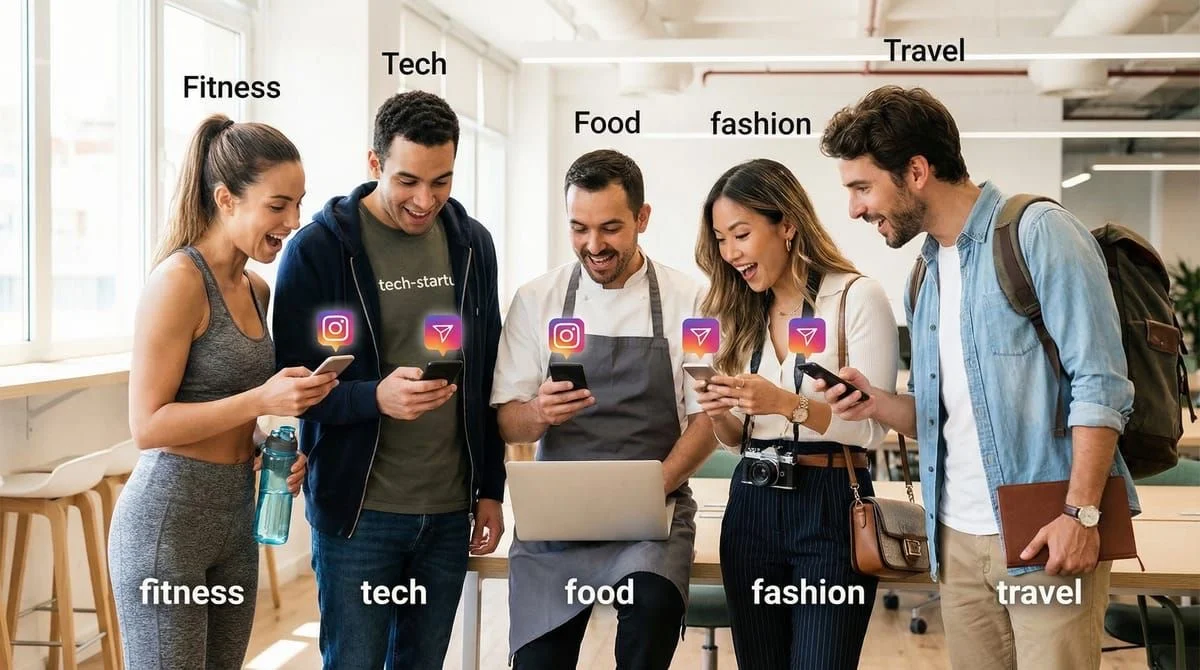

Micro-influencer monetization is the process of earning income from an Instagram following of 1,000-10,000 engaged followers through affiliate marketing, brand partnerships, digital products, and automated DM strategies. In 2026, micro-influencers earn $500-$5,000/month by leveraging their higher engagement rates (6.23% vs 1.21% for mega-influencers) and more authentic audience connections.
Here’s the reality: you don’t need 100K followers to make real money on Instagram.
The data backs this up. According to DemandSage’s 2026 Influencer Marketing Report, 67% of brands now prefer working with micro-influencers over mega-influencers. That’s a 10x preference rate. Why? Because your smaller, engaged audience converts better than a massive, passive one.
If you have between 1K-10K followers, you’re sitting on a monetization goldmine. This guide shows you exactly how to tap it.
TL;DR
- Engagement advantage is real: Micro-influencers (1K-10K) achieve 6.23% engagement vs 1.21% for mega-influencers - that’s 5x higher
- Best monetization path: Affiliate marketing : digital products : small brand deals (in that order)
- Realistic income: $500-$2,000/month at 5K followers; $2,000-$5,000/month at 10K with diversified streams
- DM automation is the equalizer: Respond to every “link?” comment instantly without hiring a team
- Brands prefer you: 67% of brands now choose micro-influencers over mega-influencers (10x preference rate)
Why Micro-Influencers Win in 2026
The influencer marketing industry hit $30 billion in 2025 and is projected to exceed $40 billion by the end of 2026 (DemandSage, accessed January 9, 2026). But here’s what’s changed: brands are shifting budgets away from celebrity endorsements toward creators like you.

The Engagement Rate Advantage
| Influencer Tier | Follower Count | Avg. Engagement Rate |
|---|---|---|
| Nano | 1K-10K | 6.23% |
| Micro | 10K-100K | 3.86% |
| Mid-tier | 100K-1M | 1-2% |
| Mega | 1M+ | 0.5-1.21% |
Source: InfluenceFlow Engagement Rate Benchmarks 2026, accessed January 9, 2026
Your engagement rate is 3-5x higher than mega-influencers. This translates directly to conversions. According to Bsky Growth’s ROI analysis (February 2026):
- Micro-influencer conversion rate: 4.2%
- Macro-influencer conversion rate: 2.1%
- Cost per engagement: $0.05-$0.15 (micro) vs $0.50-$2.00 (macro)
Brands get 2x the conversions at 1/10th the cost. That’s why 64% of marketers have already partnered with micro-influencers (HubSpot 2026 State of Marketing Report).
Why Brands Choose Micro Over Mega
- Higher ROI: Micro-influencer campaigns generate $5-6.50 per $1 spent
- Authenticity: Your recommendations feel genuine, not like ads
- Niche targeting: You reach specific audiences brands can’t access otherwise
- Lower risk: Brands can test with multiple micro-influencers vs betting everything on one celebrity
- Better engagement: Comments, saves, and shares - not just passive scrolling
Monetization Methods Ranked for Micro-Influencers
Not all monetization methods work equally well at every follower count. Here’s what to focus on based on where you are right now.
Tier 1: Start Now (1K+ Followers)
These methods work immediately - no minimum follower requirements, no waiting for brand deals.
1. Affiliate Marketing (Best ROI for Small Creators)
Affiliate marketing pays you a commission (typically 5-30%) when followers buy products through your links. It’s the fastest path to income for micro-influencers.
Why it works at small scale:
- No follower minimum required
- Earn from every sale, not just sponsored posts
- Compounds over time (old content keeps earning)
- 16% of all e-commerce sales come from affiliates (Shopify 2026)
Realistic earnings at 1K-10K followers:
- Amazon Associates: 1-10% commission (average $50-$300/month)
- Digital products: 20-50% commission (average $200-$1,000/month)
- High-ticket items: $100+ per sale
Example: A creator with 16K followers earned $500/month from affiliate links alone (Neal Schaffer research, February 2026). At 5K engaged followers, $200-$400/month is realistic.
The key is DM automation for affiliate marketing. When someone comments “link?” on your post, an automated DM delivers your affiliate link instantly. This captures sales you’d otherwise lose to slow response times.
2. Digital Products (Highest Margins)
Digital products - templates, guides, presets, mini-courses - offer 90%+ profit margins. You create once, sell forever.
Best digital products for micro-influencers:
- Notion templates ($9-$29)
- Lightroom presets ($15-$49)
- Mini-guides/ebooks ($19-$47)
- Workout plans ($27-$97)
- Recipe collections ($15-$35)
Learn how to create and launch a digital product in 7 days.
Why it works at small scale:
- You only need 100 buyers at $27 = $2,700
- With 5K followers and 2% conversion = 100 sales
- No inventory, shipping, or customer service headaches
3. Services and Coaching
Your expertise has value - even with a small following. Micro-influencers in specific niches can charge premium rates for:
- 1:1 coaching: $50-$200/hour
- Consulting calls: $100-$500/session
- Done-for-you services: $500-$2,000/project
The math: 4 coaching clients at $150/month = $600/month recurring revenue. You only need 0.08% of a 5K following to become clients.
Use Instagram DM automation for coaches to send your Calendly link automatically when followers ask about coaching.
Tier 2: Build to 5K+ Followers
Once you pass 5K followers, brand deal opportunities open up.
4. Small Brand Deals ($100-$500)
At 5K+ followers, brands start paying attention. Expect:
| Content Type | Rate (5K-10K followers) |
|---|---|
| Feed Post | $50-$250 |
| Story (per frame) | $25-$100 |
| Reel | $75-$300 |
| Package (post + stories) | $150-$500 |
Source: Influencer Marketing Hub 2026 Rate Calculator, accessed January 9, 2026
How to land your first brand deal:
- Create a media kit (engagement rate, audience demographics, past work)
- Pitch brands you already use and love
- Start with product-for-post exchanges to build a portfolio
- Join influencer platforms (Collabstr, AspireIQ, Grin)
Pro tip: 80% of brand collaborations on platforms like Collabstr cost under $300 (Collabstr 2026 data). Small deals add up.
5. Larger Digital Products
With more followers and social proof, you can charge more:
- Full courses: $97-$297
- Membership communities: $19-$49/month
- Premium templates: $49-$99
A creator with 8K followers selling a $97 course to 2% of their audience = $15,520 in revenue.
Tier 3: Scale to 10K+ Followers
At 10K followers, you unlock Instagram’s monetization features and bigger brand opportunities.
6. Bigger Brand Deals ($500-$2,000+)
2026 rates for 10K-50K followers:
| Content Type | Rate Range |
|---|---|
| Feed Post | $150-$500 |
| Reel | $200-$800 |
| Story Package | $100-$400 |
| Long-term partnership | $1,000-$5,000/month |
Source: Afluencer 2026 Influencer Rate Guide, accessed January 9, 2026
2026 trend: Hybrid compensation models
Brands are moving beyond flat fees. Expect:
- Base fee + performance bonus (10-15% commission on sales)
- Tiered bonuses tied to conversion goals
- Affiliate codes with revenue share
This benefits micro-influencers. Your high engagement = more conversions = bigger payouts than macro-influencers chasing awareness metrics.
7. Instagram Subscriptions
Instagram Subscriptions lets you charge $0.99-$99.99/month for exclusive content. Requirements:
- 10K+ followers (as of February 2026)
- Professional account
- Available in 40+ countries
What subscribers get:
- Subscriber-only posts and Reels
- Subscriber-only Lives
- Subscriber badges in comments
- Exclusive Stories
Retention insight: Creators offering tangible perks (early access, templates, private Q&As) retain 60% more subscribers after month 3 (Shopify Creator Economy Report 2026).
The Micro-Influencer Advantage: Personal Connection
Here’s what mega-influencers can’t do: respond to every DM personally.
Your audience chose to follow YOU. They want a relationship, not just content. This personal connection is your competitive moat.
How to use it:
- Reply to comments within the first hour (algorithm boost + relationship building)
- Use Stories for behind-the-scenes content
- Go Live to answer questions directly
- Send personalized DMs to new followers
The problem? This doesn’t scale. At 5K+ followers, you can’t manually reply to every “link?” comment or story reply.
That’s where automation comes in.
DM Automation for Micro-Influencers
DM automation lets you maintain that personal connection at scale. When a follower comments “link” on your Reel, they get an instant DM with your affiliate link - no manual work required.
Why This Matters for Monetization
Without automation:
- Follower comments “interested” at 2am
- You see it at 9am
- They’ve already bought from someone else (or forgotten)
With automation:
- Follower comments “link”
- DM delivered in 2 seconds
- They click and buy while still excited
The data proves this works. According to CreatorFlow user analytics:
- DM click-through rate: 12-18%
- Bio link click-through rate: 2-3%
- Conversion increase: 4-6x higher via DM
Learn more about DM vs bio link performance.
What You Can Automate
- Affiliate link delivery: Auto-send product links when followers comment trigger words
- Lead capture: Collect emails within DMs for your newsletter
- Booking links: Send Calendly automatically for coaching inquiries
- Content delivery: Send free guides/resources to build trust
CreatorFlow for Micro-Influencers
CreatorFlow was built specifically for creators like you:
- Flat-rate pricing: $15/month (no per-contact fees that punish growth)
- 500 free DMs/month on the free plan
- 5-minute setup: No complex workflow builders
- Meta-verified: Uses official Instagram API (100% safe, no ban risk)
Most enterprise tools charge per contact - meaning as your audience grows, costs explode. CreatorFlow’s flat rate lets you scale without proportional cost increases.
Case Studies: Real Micro-Influencer Income
Case Study 1: Fitness Creator (24K followers)
Platform: TikTok + Instagram Monthly income: $10,000+
Income breakdown:
- Amazon storefront commissions: $3,000-$5,000
- Sponsored brand deals: $2,000-$3,000
- UGC content creation: $1,500-$2,000
- Affiliate marketing: $1,000-$1,500
- TikTok Creator Rewards: $500-$1,000
Key insight: Diversification is everything. No single income stream exceeds 40% of total.
Source: Neal Schaffer Creator Economy Research, February 2026
Case Study 2: Eco-Cleaning Brand Campaign (211 Micro-Influencers)
Brand: Blueland Campaign: 211 micro-influencers via Stack Influence
Results:
- Amazon seller rank: Jumped from #36K to #5,800 (6.3x improvement)
- Monthly unit sales: Grew 4.7x
- Revenue added: $129,000+ over 3 months
- ROI: 13x after all fees and product costs
Key insight: Micro-influencers drove more revenue than traditional advertising at a fraction of the cost.
Source: Stack Influence Case Studies, accessed January 9, 2026
Case Study 3: Sustainable Fashion (35 Micro-Influencers)
Brand: Tentree Campaign: Nano/micro influencers on TikTok and Instagram
Results:
- ROI: 13x
- Tracked conversions: 1,000+
- Influencer-generated content: 800+ pieces
Key insight: Micro-influencers created a content library brands could repurpose across channels.
Your 90-Day Micro-Influencer Monetization Plan
For a more detailed month-by-month income scaling guide, see our Instagram income roadmap from $0 to $5K/month.
Days 1-30: Foundation
Goal: First $100 in affiliate income
- Join 2-3 affiliate programs relevant to your niche
- Create 4 pieces of content featuring affiliate products
- Set up DM automation for affiliate links
- Track which products and content types perform best
Metrics to track: Click-through rate, conversion rate, revenue per post
Days 31-60: Optimization
Goal: $300-$500/month + first brand inquiry
- Double down on top-performing affiliate products
- Create a simple digital product ($15-$29)
- Build a media kit with your engagement stats
- Pitch 5 brands you already use
Metrics to track: Revenue per follower, brand response rate
Days 61-90: Scale
Goal: $500-$1,000/month + recurring revenue
- Launch subscription or membership offering
- Systematize content creation (batch filming, templates)
- Add email capture to your DM automation
- Negotiate your first recurring brand partnership
Metrics to track: Monthly recurring revenue, email list growth, time spent on DMs (should decrease with automation)
For a complete roadmap, see our guide on your first 90 days as a creator.
Common Micro-Influencer Monetization Mistakes
1. Waiting for “Enough” Followers

You can start monetizing at 1K followers. Affiliate marketing, digital products, and services don’t require brand deal minimums. Every day you wait is revenue lost.
2. Ignoring DM Revenue
Your DMs are a goldmine. Collecting emails through Instagram DMs builds an asset you own (unlike followers, which Instagram controls). One email subscriber is worth $1-$3/month in potential revenue.
3. Underpricing Everything
Micro-influencers often accept $50 for work worth $200. Know your value:
- Your engagement rate is significantly higher than mega-influencers
- Your conversion rate is 2x higher
- Calculate your rate based on results, not follower count
4. Single Income Stream Dependency
If 100% of your income comes from brand deals, one algorithm change destroys your business. Diversify across:
- Affiliate income (passive)
- Digital products (semi-passive)
- Services (active)
- Brand deals (variable)
5. Manual DM Management
Responding to every “link?” comment manually doesn’t scale. At 5K+ followers, you’ll either burn out or miss sales. Automation maintains the personal touch while freeing your time for content creation.
FAQ
How many followers do I need to start monetizing?
You can start monetizing with 1,000 followers. Affiliate marketing, digital products, and services have no minimum requirements. Brand deals typically start around 5K followers, though some brands work with nano-influencers (1K-5K) for product exchanges.
How much can micro-influencers realistically earn?
**Realistic monthly income by follower count (as of February 2026):
- 1K-5K followers: $100-$500/month
- 5K-10K followers: $500-$2,000/month
- 10K+ followers: $2,000-$5,000+/month**
These figures assume diversified income (affiliate + digital products + brand deals) and consistent content creation.
What’s the best monetization method for beginners?
Affiliate marketing. It requires no upfront investment, no product creation, and no brand relationships. Join Amazon Associates or niche-specific programs, create content featuring products you already use, and set up DM automation to deliver links instantly.
Is DM automation safe for my account?
Yes - if you use tools that work with Meta’s official Instagram Graph API. CreatorFlow is a Meta-verified tech provider, meaning it uses Instagram’s approved methods for messaging. Avoid tools that require your password or use unofficial workarounds.
How do I find brands that work with micro-influencers?
1. Influencer platforms: Collabstr, AspireIQ, Grin, Upfluence 2. Direct outreach: Email brands you already use (smaller brands are more responsive) 3. Hashtag research: Search #gifted or #sponsored in your niche to find brands working with similar creators 4. Brand PR lists: Sign up for PR mailing lists in your industry
What engagement rate should I aim for?
At 1K-10K followers, aim for 4-8% engagement rate (likes + comments / followers). The average for nano-influencers is 6.23%. If you’re below 3%, focus on content quality and community engagement before heavy monetization.
Related Articles
Continue your monetization journey with these guides:
- Make Money on Instagram with Small Following - Complete monetization strategies
- Instagram DM Automation Complete Guide - Automate your sales process
- Scale Affiliate Marketing with DM Automation - Maximize affiliate income
- How to Get Brand Deals Under 10K Followers - Land paid partnerships
- Turn Instagram Followers into Customers - Convert followers to sales
Start Monetizing Today
You have followers. You have engagement. You have influence.
What you might not have is a system to convert that influence into income.
Here’s your action plan for today:
- Join one affiliate program in your niche
- Create content featuring a product you genuinely use
- Set up CreatorFlow to auto-deliver links via DM
- Track your first affiliate sale
Micro-influencers who automate their DMs earn 4-6x more from the same content. The engagement advantage you already have becomes a revenue advantage.
Your 10K followers aren’t a limitation. They’re your unfair advantage - if you monetize them right.