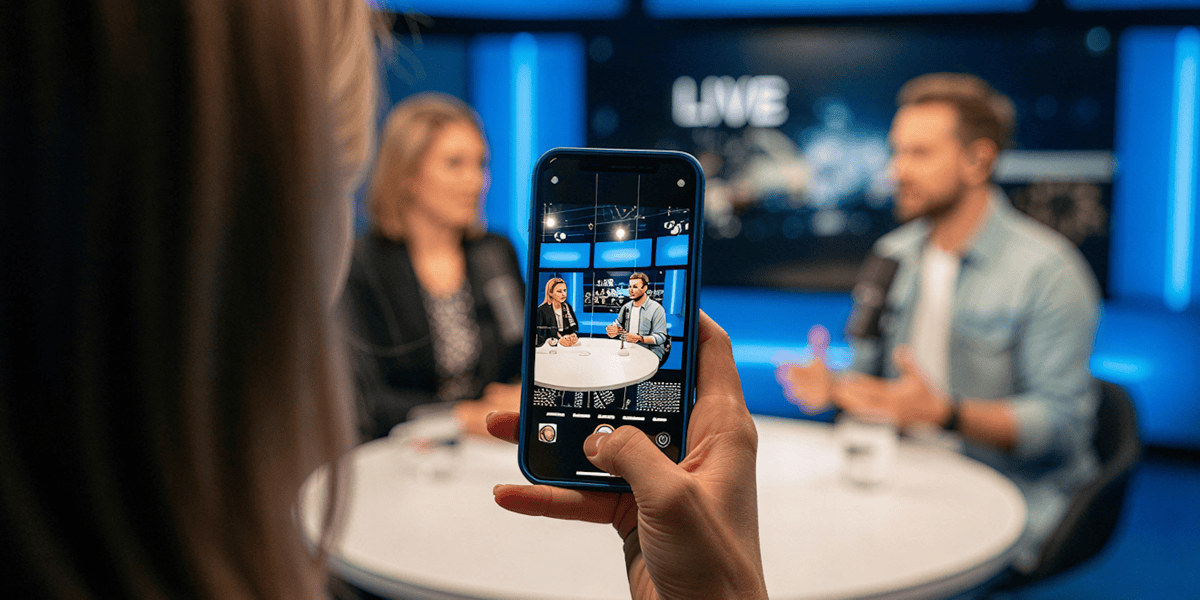

Instagram DM automation for podcasters sends episode links, show notes, and guest application forms automatically when listeners comment trigger words like “LINK” or “GUEST.” This converts casual commenters into subscribed listeners within seconds instead of hours. DM automation helps podcasters convert commenters into listeners faster and saves hours each week on repetitive messaging tasks.
You drop a new episode. Post about it on Instagram. Get 30 comments asking “Where can I listen?” and “What episode was that guest on?”
By the time you respond 6 hours later, they’ve moved on. Forgot about your show. Started listening to someone else’s podcast instead.
This is why podcasters with smaller audiences often outgrow podcasters with massive followings. The small-audience creators respond instantly. They capture every potential listener while the interest is hot. They turn casual commenters into subscribed listeners within 8 seconds.
Instagram DM automation does this for you automatically. Someone comments “LINK”? They get your episode URL in 2 seconds. Someone asks about being a guest? They get your application form instantly. Someone wants your show notes? Delivered before they scroll to the next post.
This guide shows you exactly how to set up DM automation for your podcast: 5 workflows that work specifically for podcasters, templates you can copy-paste today, and how to build your listener email list on autopilot.
TL;DR
Instagram DM automation for podcasters sends episode links, show notes, and guest applications automatically when listeners comment trigger words. Tools like CreatorFlow ($15/mo as of February 2026) let you set up automations in 5 minutes. DM automation helps podcasters convert more commenters into listeners and save hours weekly on repetitive DM tasks.
5 podcast workflows to automate:
- Episode link delivery - Comment “LISTEN” : instant Spotify/Apple link
- Guest applications - Comment “GUEST” : application form link
- Show notes/resources - Comment “NOTES” : episode resources page
- Listener feedback - Comment “FEEDBACK” : survey or voice note link
- Community building - Comment “JOIN” : Discord/newsletter signup
Results podcasters see:
- 40-60% of commenters become listeners (vs 10-15% without automation)
- 5-10 hours/week saved on manual DM responses
- 30-50% email opt-in rate with episode-specific lead magnets
- 3X more guest applications with instant response
Tool recommendation: CreatorFlow ($15/mo) - flat-rate pricing, 5-minute setup, perfect for podcasters who need simple episode link delivery and email capture (as of February 2026).
Setup time: 5-10 minutes per workflow
Why Podcasters Need DM Automation
Podcast discovery on Instagram works differently than other content.

When someone discovers your Reel about a podcast topic, they’re interested for exactly 30 seconds. That’s your window. If they can’t find your episode link immediately, they move on. They won’t search for your podcast later. They won’t remember your show name tomorrow.
The math is brutal:
- Average Instagram user attention: 8 seconds per post
- Time to manually respond to a DM: 2-4 hours (realistically)
- Listener interest decay: 90% gone within 1 hour of initial engagement
What DM automation changes:
- Response time: 2-8 seconds (automatic)
- Listener capture rate: 40-60% (vs 10-15% manual)
- Your time investment: 0 minutes per response
Here’s what one podcaster experienced:
“I was getting 20-30 ‘where do I listen?’ comments per episode post. Maybe 3-4 people actually followed through after I responded hours later. With automation, that same 20-30 comments converts to 15-20 actual listeners. Same effort from me - zero.” - True crime podcaster, 45K followers
Three Problems DM Automation Solves for Podcasters
Problem 1: Episode links get buried
Your bio link goes to Linktree. Your Linktree has 8 links. Your podcast is third from the bottom. By the time someone navigates there, they’ve lost interest.
The fix: DM the exact episode link directly. No clicking, no searching, no friction.
Problem 2: Guest applications get lost
Potential guests DM you “I’d love to be on your show!” You respond 2 days later with “Great! Fill out this form.” They never do. They found another podcast that responded in 5 minutes.
With automation: Instant guest application link delivery. Capture serious guests while they’re motivated.
Problem 3: No email list from Instagram
You have 15,000 Instagram followers. Instagram could delete your account tomorrow. All 15,000 listeners - gone. No way to contact them.
Solution: Capture emails automatically when delivering episode links. Build an asset you own.
5 Automation Workflows for Podcasters
These are the exact workflows working for podcasters right now (as of February 2026). Each one solves a specific podcast growth problem.
Workflow 1: Episode Link Delivery
The most important automation for any podcaster.
How it works:
- You post a Reel/carousel about your latest episode
- Caption includes: “Comment LISTEN to get the episode link!”
- Someone comments “LISTEN”
- They instantly receive a DM with your episode link
Setup in CreatorFlow:
- Trigger word: “LISTEN” (or “EPISODE”, “LINK”, “PODCAST”)
- Response: Direct link to episode on their preferred platform
Template message:
Hey! Here's the episode you asked about:

🎧 Spotify: [SPOTIFY-LINK]
🍎 Apple Podcasts: [APPLE-LINK]
📺 YouTube: [YOUTUBE-LINK]

Which platform do you use? Would love to know!
Pro tip: Ask which platform they prefer. This data helps you prioritize where to focus your promotion efforts.
Why this works:
- Zero friction (link delivered in 2 seconds)
- Multiple platform options (captures all listener types)
- Conversation starter (asking their preference opens dialogue)
Workflow 2: Guest Application Collection
Turn “I want to be on your show” into actual booked guests.
Every podcaster gets DMs from potential guests. Most never convert because the response time is too slow. By the time you send your application form, they’ve pitched 5 other shows and forgotten about yours.
How it works:
- You post about an upcoming topic or guest search
- Caption: “Want to be a guest? Comment GUEST for application!”
- Someone comments “GUEST”
- They instantly receive your guest application link
Template message:
Thanks for your interest in being a guest on [PODCAST NAME]!

Here's our guest application (takes 3 minutes):
[APPLICATION-LINK]

We review applications every Friday and book guests 4-6 weeks out.

What topic would you want to discuss?
What to include in your application form:
- Name and contact info
- Area of expertise
- Previous podcast appearances (links)
- 2-3 topic ideas they could discuss
- Their audience size (optional but helpful)
Tools for application forms:
- Typeform (free tier available)
- Google Forms (free)
- Notion forms (free with Notion)
- Tally (free, unlimited forms)
Result: 3X more completed applications. Guests who respond to instant DMs are 80% more likely to show up for recording.
Workflow 3: Show Notes & Resources
Deliver value beyond the audio.
Listeners want your resources. The books you mentioned. The links you referenced. The tools you discussed with your guest. But they’re not going to hunt through your website to find them.
How it works:
- Mention resources during your episode
- Post about it: “Comment NOTES for all the links from today’s episode!”
- Someone comments “NOTES”
- They receive a DM with the resource page link
Template message:
Here are all the resources from Episode #[NUMBER]:

📝 Full show notes: [SHOW-NOTES-LINK]

Quick links mentioned:
• [RESOURCE-1-NAME]: [LINK]
• [RESOURCE-2-NAME]: [LINK]
• [BOOK-NAME]: [AMAZON-LINK]

Which resource are you most interested in?
Pro tip: Create a dedicated show notes page for each episode. This also helps with SEO - people searching for topics you discussed can find your episode.
Email capture opportunity: “Want show notes for every episode? Drop your email and I’ll send them automatically when new episodes drop.”
Workflow 4: Listener Feedback Collection
Build a feedback loop that improves your show.
The podcasters who grow fastest are the ones who know what their listeners want. But most never ask. And when they do ask, they don’t make it easy to respond.
How it works:
- End episodes with: “Have feedback? Find me on Instagram and comment FEEDBACK”
- Post asking for listener input
- Someone comments “FEEDBACK”
- They receive a link to leave feedback (survey, voice note, or direct response)
Template message:
Thanks for wanting to share feedback! It genuinely helps make the show better.

Choose how you'd like to share:

🎤 Voice note (30 sec): [SPEAKPIPE-LINK]
📝 Quick survey (2 min): [SURVEY-LINK]
💬 Or just reply to this DM!

What episode did you want to give feedback on?
Tools for collecting feedback:
- SpeakPipe (voice messages, free tier)
- Typeform (surveys)
- Direct DM replies (manual but personal)
What to ask in feedback surveys:
- Favorite episode topic
- Episode length preference
- Guest suggestions
- What they’d change about the show
- How they discovered you
Workflow 5: Community Building
Convert listeners into community members.
A podcast is one-way. A community is two-way. The podcasters building real businesses are the ones turning passive listeners into active community members - through Discord servers, email newsletters, Facebook groups, or Skool communities powered by DM automation.
How it works:
- Mention your community during episodes and posts
- Caption: “Comment JOIN to get access to our listener community!”
- Someone comments “JOIN”
- They receive community signup link
Template message:
Welcome to the [PODCAST NAME] community!

Here's where our listeners hang out:

🎯 Discord: [DISCORD-INVITE]
📧 Weekly newsletter: [NEWSLETTER-LINK]
🎓 Free course/guide: [LEAD-MAGNET-LINK]

Which one interests you most?
Community platform options:
- Discord (free, best for active discussion)
- Skool (paid, best for premium communities)
- Facebook Groups (free, high engagement)
- Circle (paid, clean interface)
- Email newsletter (simplest, you own the list)
The email capture angle:
This workflow is your biggest opportunity to build an email list. Instead of just sending a Discord link, ask for their email to send them the invite:
I'd love to have you in our community!

Reply with your email and I'll send you:
✅ Discord invite link
✅ Our best episode recommendations
✅ Exclusive behind-the-scenes content

What's your email?
This captures emails while delivering value. Win-win.
Content Strategy for Podcast Promotion
DM automation works best when your content strategy feeds into it. Here’s how to create posts that drive people to comment your trigger words.
Post Types That Drive Comments
1. Episode Announcement Posts
The obvious one. But most podcasters do it wrong.
❌ Wrong way:
“New episode out! Link in bio.”
✅ Right way:
“Just dropped: Why [GUEST] left a $300K job to [THING].
The story about [SPECIFIC MOMENT] at 23:47 still gives me chills.
Comment LISTEN and I’ll send you the link.”
Why it works: Specific details create curiosity. A timestamp makes it tangible. The trigger word removes friction.
2. Clip Teasers
Short video clips (15-60 seconds) from your episodes perform incredibly well on Instagram.
Structure:
- Hook in first 2 seconds (the most interesting quote from the clip)
- Clip plays (15-60 seconds)
- End card: “Full episode : Comment LISTEN”
3. Behind-the-Scenes Content
Show your recording setup, interview prep, editing process, or bloopers. People love seeing how podcasts are made.
End with: “Want to see more BTS? Comment JOIN to get on our insider newsletter.”
4. Guest Promotion Posts
When guests share their episode, comment on their post and direct their audience to your automation:
“Thanks for having me, [GUEST]! If anyone wants the episode link, comment LISTEN on my latest post and I’ll send it over.”
5. Topic Deep-Dives
Take one topic from an episode and expand on it in a carousel or Reel. Then direct people to the full episode.
Example carousel title: “5 things I learned interviewing 100 entrepreneurs”
End slide: “This is from Episode #47. Comment NOTES for the full breakdown.”
Content Calendar for Podcasters
Per episode, post this sequence:
| Day | Post Type | Trigger Word |
|---|---|---|
| Release day | Episode announcement | LISTEN |
| Day 2 | Best clip from episode | LISTEN |
| Day 3 | Behind-the-scenes | JOIN |
| Day 5 | Carousel topic expansion | NOTES |
| Day 7 | Guest quote graphic | LISTEN |
This gives you 5 pieces of content from every single episode. Each one drives people into your DM automations.
Podcast-Specific DM Templates
Copy-paste these templates into CreatorFlow. Customize the bracketed sections for your show. For more message ideas across different niches, see our full Instagram DM automation template library.
Template 1: Episode Link Delivery
Hey [NAME]! Thanks for wanting to check out the episode.

Here's "[EPISODE TITLE]":

🎧 Spotify: [LINK]
🍎 Apple: [LINK]
▶️ YouTube: [LINK]

The part about [SPECIFIC TOPIC] starts at [TIMESTAMP] if you want to skip ahead.

Let me know what you think after you listen!
Template 2: Guest Application
Thanks for your interest in being on [PODCAST NAME]!

We're always looking for guests with interesting stories and expertise.

Here's our quick application (3 minutes):
[APPLICATION-LINK]

A few things that help your application stand out:
• Specific topic ideas (not just "I can talk about business")
• Previous podcast/media appearances
• Unique angle you bring to the topic

We review apps every [DAY] and book 4-6 weeks out.

What topic would you pitch?
Template 3: Show Notes Delivery
Here's everything from Episode #[NUMBER]: "[EPISODE TITLE]"

📝 Full show notes: [LINK]

Resources mentioned:
• [RESOURCE 1]: [LINK]
• [RESOURCE 2]: [LINK]
• [BOOK]: [AMAZON LINK]

Guest's links:
• [GUEST NAME]'s website: [LINK]
• [GUEST NAME]'s [PLATFORM]: [LINK]

Was there anything specific you wanted that I missed?
Template 4: Feedback Request
Really appreciate you taking time to share feedback!

Your input directly shapes future episodes.

🎤 Leave a voice note (30 seconds): [SPEAKPIPE-LINK]
📝 Quick survey (2 mins): [TYPEFORM-LINK]

Or just reply here - I read everything.

What's on your mind?
Template 5: Community Invite + Email Capture
So glad you want to join our community!

Here's how to get access:

Reply with your email and I'll send you:
✅ Our private Discord invite
✅ My personal top 10 episode recommendations
✅ Weekly behind-the-scenes updates

What email should I send it to?
Template 6: New Listener Welcome
For people who comment on your content for the first time:
Hey! Don't think we've connected before.

Welcome to the [PODCAST NAME] world!

If you're new, here's where to start:
🎯 Most popular episode: [LINK]
🔥 My personal favorite: [LINK]
📅 Latest episode: [LINK]

What topics are you most interested in?
Setting Up Your First Podcast Automation
Here’s the step-by-step for CreatorFlow (the process is similar for other tools):
Step 1: Connect Your Instagram Account
- Go to CreatorFlow
- Click “Get Started Free”
- Connect your Instagram Business or Creator account
- Authorize the Meta API connection
Note: You need a Business or Creator account. Personal accounts don’t support DM automation via the official API.
Step 2: Create Your First Trigger
- Click “New Automation”
- Select “Comment Trigger”
- Enter your trigger word: “LISTEN”
- Enable “Match variations” (catches LISTEN, listen, Listen)
Step 3: Write Your Response
Copy the episode link template above. Customize with your actual episode links.
Important: Include multiple platform options. Some listeners only use Spotify. Others only use Apple. Don’t force them to use your preferred platform.
Step 4: Test Before Going Live
- Click “Preview”
- Send a test DM to yourself
- Check that links work
- Verify the message looks good on mobile
Step 5: Activate and Post
- Turn the automation on
- Create your first post with the trigger word in the caption
- Watch the DMs flow automatically
Time to set up: 5-10 minutes.
Measuring Success: Metrics That Matter
Track these numbers weekly to see if your automation is working:

Primary Metrics
| Metric | What It Measures | Good Benchmark |
|---|---|---|
| Trigger rate | % of post viewers who comment trigger | 2-5% |
| DM delivery rate | % of triggers that receive DM | 95%+ |
| Click-through rate | % of DM recipients who click link | 40-60% |
| Email capture rate | % who provide email when asked | 30-50% |
Calculating Your Numbers
Example:
- Post reaches 5,000 people
- 150 comment “LISTEN” (3% trigger rate - good)
- 145 receive the DM (97% delivery - good)
- 75 click the episode link (52% CTR - excellent)
- If you asked for email: 35 provide it (47% capture - excellent)
Compare to not using automation:
- Same 5,000 reach
- 150 comment “LINK”
- You respond to maybe 50 (when you have time)
- 10-15 click (20-30% of those you responded to)
Result: 75 listeners vs 15 listeners. 5X improvement.
Tools for Tracking
- CreatorFlow: Built-in analytics dashboard
- Spotify for Podcasters: Track listener spikes after posts
- Apple Podcasts Connect: Same - track download patterns
- Google Sheets: Manual tracking if you want custom reports
Common Mistakes Podcasters Make
Mistake 1: Too Many Trigger Words
Don’t create 10 different triggers. Our guide on Instagram comment keywords that convert goes deep on choosing the right trigger words. Stick to 2-3 max:
- Primary: “LISTEN” or “EPISODE”
- Secondary: “GUEST” (if actively recruiting)
- Tertiary: “JOIN” (for community building)
More triggers = more confusion. Keep it simple.
Mistake 2: Generic Messages
❌ “Here’s the link: [LINK]”
✅ Personalized with episode title, timestamps, multiple platforms, and a follow-up question.
Mistake 3: Not Asking for Email
Every DM is an opportunity to capture an email. If you’re just sending links without asking for email, you’re leaving money on the table.
Add this to the end of any template:
Want episode links sent straight to your inbox each week?
Drop your email and I'll add you to the list!
Mistake 4: Forgetting to Update Links
Your “latest episode” automation from 3 months ago is still sending the wrong link. Set a reminder to update episode links every release day.
Pro tip: Instead of updating links manually, send people to a “latest episode” page on your website that you update once. One link, always current.
Mistake 5: Not Promoting the Trigger Word
You created the automation but nobody knows to comment the trigger word. You need to:
- Include trigger CTA in every episode post
- Mention it verbally in episodes: “Find me on Instagram and comment LISTEN”
- Add it to your Instagram bio
- Include it in Story posts
Tracking What Works: Podcast Automation Analytics
Sending links automatically is great. Knowing which links actually convert into listeners? That’s where the real value lives.
Most podcasters set up automation and never look at the numbers. They have no idea if 10% or 60% of people who get the DM actually click through. That’s like running ads without checking conversions.
Here’s what to track weekly:
Key Metrics for Podcast Automation
| Metric | What It Measures | Good Benchmark | Where to Find It |
|---|---|---|---|
| Trigger rate | % of post viewers who comment trigger word | 2-5% | Instagram Insights |
| DM delivery rate | % of triggers that receive automated DM | 95%+ | CreatorFlow dashboard |
| Click-through rate (CTR) | % of DM recipients who click episode link | 40-60% | UTM tracking or CreatorFlow analytics |
| Email capture rate | % who provide email when asked | 30-50% | Email list growth |
| Listen-through rate | % who actually play episode after clicking | 60-80% | Spotify/Apple analytics |
Example calculation:
- Post reaches 5,000 people
- 150 comment “LISTEN” (3% trigger rate ✅)
- 147 receive DM (98% delivery ✅)
- 85 click the episode link (58% CTR ✅)
- 68 actually start playing (80% listen-through ✅)
Result: You converted 68 viewers into listeners (1.36% total conversion). Without automation, you’d manually respond to maybe 30 comments and convert 8-12 people (0.2% conversion). That’s a 6X improvement.
How to Set Up UTM Tracking
UTM parameters let you see exactly which Instagram posts drive podcast plays. Here’s how to add them to episode links:
For Spotify links:
Original: https://open.spotify.com/episode/abc123
With UTM: https://open.spotify.com/episode/abc123?utm_source=instagram&utm_medium=dm_automation&utm_campaign=ep47_launch
For Apple Podcasts:
Original: https://podcasts.apple.com/podcast/id123456
With UTM: https://podcasts.apple.com/podcast/id123456?utm_source=instagram&utm_medium=dm_automation&utm_campaign=ep47_launch
UTM parameter breakdown:
utm_source=instagram- Traffic came from Instagramutm_medium=dm_automation- Came specifically from automated DMsutm_campaign=ep47_launch- Which episode or post drove it
Pro tip: Change the campaign parameter for each episode. This shows you which episodes resonate most on Instagram vs which flop.
Where to see UTM data:
- Spotify for Podcasters: Traffic Sources report
- Apple Podcasts Connect: Sources tab
- Google Analytics (if you have a website with embedded player)
What to Do With This Data
If trigger rate is low (under 2%):
- Your CTA isn’t clear enough. Make it more obvious: “Comment LISTEN below ⬇️”
- Try different trigger words. Maybe “LINK” performs better than “LISTEN”
- Test different post formats. Reels might outperform carousels for your audience
If DM delivery rate is low (under 90%):
- Check that your automation is active (didn’t accidentally pause it)
- Verify Instagram API connection is healthy
- Check for blocked keywords or rate limits
If CTR is low (under 40%):
- Your DM message is boring. Add episode title, guest name, specific timestamp
- Include multiple platform options (Spotify + Apple + YouTube)
- Ask a question at the end to start conversation
If listen-through rate is low (under 60%):
- The episode topic didn’t match what they expected from the post
- Episode intro is too slow (first 30 seconds are critical)
- Wrong audience - Instagram followers aren’t your ideal listeners
Advanced: Segment Your Podcast Audience
Once you have 50+ people going through your automations, start treating different listener types differently. Someone who’s clicked 5 episode links isn’t the same as someone who clicked once 2 months ago.
Segmentation turns a mass email approach into personalized relationship building.
Three Core Podcast Segments
Segment 1: New Listeners (First-Time Commenters)
These people just discovered you. They don’t know your podcast’s vibe yet. They need a warm welcome and easy onboarding.
Welcome sequence DM template:
Hey! Don't think we've connected before - welcome! 👋

Here's the episode you asked about: [LINK]

If you're new to the podcast, these are my top 3 episodes to start with:
🎯 Most popular: "Episode #12: [Topic]" - [LINK]
💡 My personal favorite: "Episode #23: [Topic]" - [LINK]
🔥 Most recent: "Episode #47: [Topic]" - [LINK]

What topics are you most interested in?
How to set this up in CreatorFlow:
- Track first interaction date
- Send welcome message on first trigger
- Different message for returning commenters
Segment 2: Superfans (Clicked 3+ Episodes)
These people are hooked. They’re your biggest fans and potential evangelists. Treat them special.
Give them early access, behind-the-scenes content, or first dibs on merch/events.
Superfan DM template:
Hey [NAME]! I noticed you've listened to the last few episodes - really appreciate you being part of the crew 🙏

Dropping Episode #48 tomorrow but wanted to send you early access (12 hours before public launch): [LINK]

Also - we're starting a small Discord for regular listeners. Want in? It's just 20 people right now talking about [TOPIC].

Reply YES if you want the invite!
Why this works:
- Makes them feel seen (you noticed their engagement)
- Gives exclusive value (early access)
- Creates community (Discord invite)
- Opens two-way conversation (reply mechanism)
How to identify superfans:
- Clicked episode links 3+ times in 30 days
- Engaged with multiple post types (Reels + Stories + carousel)
- Provided email when asked
- Replied to previous DMs
Segment 3: Lapsed Listeners (30+ Days No Engagement)
These people were interested once. Life got busy. They forgot about you. A gentle nudge can bring them back.
Don’t be annoying. Be genuinely helpful with a low-pressure re-engagement.
Re-engagement DM template:
Hey [NAME]! Haven't seen you around in a bit.

We just dropped an episode on [TOPIC] and it reminded me of our first conversation about [PREVIOUS INTEREST].

No pressure at all - just thought you might find it valuable: [LINK]

Has your focus shifted away from [TOPIC]? Always curious what listeners are working on now.
Why this works:
- Acknowledges the gap (not pretending nothing happened)
- Personalizes to their previous interest
- No guilt trip (“no pressure at all”)
- Asks genuine question (opens dialogue)
When to send re-engagement DMs:
- 30 days: Soft nudge with relevant episode
- 60 days: “We miss you” with best-of compilation
- 90 days: Final check-in, ask if they want to stay subscribed
Don’t spam lapsed listeners. If they don’t respond after 2-3 attempts, let them go. Respect their time.
How to Implement Segmentation
Manual approach (start here):
- Export your contact list from CreatorFlow monthly
- Tag contacts in a spreadsheet: New / Active / Superfan / Lapsed
- Create separate automations for each segment
- Manually update segment assignments quarterly
Automated approach (advanced):
- Use CreatorFlow’s contact tagging features
- Set up behavioral triggers (3 clicks = Superfan tag)
- Time-based automation (30 days no engagement = Lapsed tag)
- Segment-specific broadcast messages for launches
Start simple. Even just separating “new” from “returning” listeners is a massive upgrade from treating everyone the same.
Re-Activate Cold Subscribers
You have 500 email subscribers from Instagram. Great. But 300 of them haven’t opened an email in 60 days. They’re dead weight.
Or are they?
Re-engagement campaigns bring 15-25% of “dead” subscribers back to life. That’s 45-75 listeners you thought were gone forever.
When Someone Goes Cold
Timeline:
- 30 days no engagement: Yellow flag. Send soft nudge.
- 60 days no engagement: Red flag. Send direct re-engagement.
- 90 days no engagement: Final warning. Unsubscribe them or archive.
Why unsubscribe inactive people?
- Email deliverability. Dead subscribers hurt your sender reputation.
- Focus on fans. Better to have 200 engaged listeners than 500 ghosts.
- Respect their time. If they’re not interested, let them go.
Re-Engagement DM Strategy
60-Day Re-Engagement Template:
Hey [NAME]!

I noticed it's been about 2 months since we last connected. Totally get it - life gets busy and podcast feeds get overwhelming.

Quick check-in: Are you still interested in [PODCAST TOPIC]?

If yes → Here's our best episode from the last 60 days: [LINK]

If not → No worries at all! Want me to remove you from the list so I'm not cluttering your DMs?

Either way, appreciate you 🙏
Why this works:
- Acknowledges reality (it’s been 2 months, we both know it)
- Offers easy out (respect their decision)
- Provides immediate value (best recent episode)
- Personal tone (no corporate BS)
Re-Engagement Email Strategy
If you collected emails through automation, you can also re-engage via email:
Subject line: “Should I keep sending these?”
Email body:
Hey [NAME],

Haven't seen you engage with the podcast in about 60 days.

Before I keep sending episode updates, wanted to check: are these emails still valuable to you?

👍 YES, keep them coming → Click here: [LINK]
👎 NAH, unsubscribe me → Click here: [LINK]

If I don't hear from you in 7 days, I'll assume you want out and remove you from the list.

Thanks for being part of the crew at some point 🙏

[YOUR NAME]
[PODCAST NAME]
Results to expect:
- 15-25% click “keep sending” (re-engaged!)
- 5-10% click “unsubscribe” (clean list)
- 65-80% ignore (auto-remove after 7 days)
The magic: Those 15-25% who re-engage often become superfans. They made an active choice to stay. That’s more valuable than passive subscribers.
What to Send Re-Engaged Listeners
Don’t just send them back into your normal email sequence. They already ignored that once.
Send something different:
- Behind-the-scenes content they haven’t seen
- “Best of” compilation (top 5 episodes from last 90 days)
- Exclusive interview or bonus episode
- Early access to upcoming episode
Make it worth their decision to re-engage.
When to Give Up
90 days no engagement? Let them go.
Send one final email:
Subject: Goodbye from [PODCAST NAME]

Hey [NAME],

This is the last email you'll get from me.

You haven't engaged with the podcast in 90+ days, so I'm removing you from the list.

If you ever want back in, you know where to find me on Instagram: @[HANDLE]

Appreciate the time we had 🙏

[YOUR NAME]
Then unsubscribe them. Clean lists perform better than bloated ones.
Exception: If they subscribed less than 6 months ago, give them one more chance at 120 days. New podcasters sometimes take time to find their rhythm with listeners.
FAQ
Is Instagram DM automation safe for my podcast account?
Yes, when using tools that connect through Meta’s official Instagram Graph API. CreatorFlow, ManyChat, and LinkDM all use the official API - no password sharing, no bots, no ban risk. Instagram explicitly supports this type of automation through their business API (as of February 2026).
What’s the best Instagram automation tool for podcasters?
CreatorFlow ($15/mo) is best for most podcasters because:
- Flat-rate pricing (no per-subscriber costs)
- 5-minute setup (template-based)
- Built-in email capture
- Clean interface designed for creators
ManyChat ($15-65/mo) is better if you need advanced conditional workflows or multi-platform support (Facebook, WhatsApp, SMS).
How many DMs can I send per day?
Instagram’s API limits you to 200 DMs per hour (Meta API). For most podcasters, this is way more than you’ll ever need. If you’re getting 200+ comments per hour, that’s a good problem to have.
Can I personalize automated DMs with the person’s name?
Yes. Most tools support merge fields like {first_name} that pull the person’s name from their Instagram profile. Example: “Hey {first_name}! Here’s the episode you asked about…”
Should I use different triggers for different episodes?
No. Use one consistent trigger word (like “LISTEN”) and update the episode link in your automation when you release new episodes. Consistency trains your audience to know what to comment.
How do I capture emails without being spammy?
**Offer genuine value in exchange for the email:
- “Want show notes for every episode? Drop your email!”
- “I’ll send you my top 10 episodes for new listeners”
- “Get early access to new episodes before they go live”**
The email ask should feel like a bonus, not a requirement.
What if someone comments the trigger word on an old post?
They’ll still receive your automated DM. Most tools don’t distinguish between new and old posts. This is usually fine - a listener finding an old post still wants the episode link.
If you want to avoid this, some tools let you limit triggers to posts created in the last X days.
Can I use automation for podcast sponsorship inquiries?
Absolutely. Create a trigger like “SPONSOR” or “ADVERTISE” that sends your media kit or rate card automatically. This qualifies serious sponsors and filters out people who are just curious.
How does CreatorFlow compare to other podcast automation tools like Inro or ManyChat?
Different tools serve different podcaster needs:
CreatorFlow ($15/mo) - Best for simple podcasters:
- Flat-rate pricing (no per-contact fees that scale with growth)
- 5-minute template-based setup
- Perfect for episode link delivery and email capture
- No CRM complexity - just works
- Best for: 0-1,000 downloads/episode, want simplicity
Inro (€12.99/mo + per-contact) - Best for data-driven growth:
- AI conversational agent (not template-based)
- Built-in Instagram CRM with behavioral segmentation
- Advanced lifecycle automation and retargeting
- Higher learning curve, more features
- Best for: 1,000-10,000+ downloads/episode, want funnel optimization
ManyChat ($15-65/mo) - Best for multi-platform:
- Instagram + Facebook Messenger + WhatsApp + SMS
- Advanced workflow builder with conditional logic
- Largest user base (established platform)
- More complex setup than CreatorFlow
- Best for: Multi-channel presence, need Facebook/WhatsApp automation too
Choose CreatorFlow if: You want simple episode link delivery, prefer flat-rate pricing, don’t need CRM features, value ease of setup over advanced features.
Choose Inro if: You want AI-powered conversations, need behavioral segmentation, willing to learn complex tool, ready to invest in growth infrastructure.
Choose ManyChat if: You need automation across multiple platforms (not just Instagram), already use Facebook/WhatsApp for podcast promotion, need advanced conditional workflows.
How do I know if my automation is working?
**Check these indicators:
- DMs are being sent (check your Sent folder) 2.** People are clicking links (use UTM tracking)
- Listener numbers correlate with post engagement
- You’re getting fewer manual “where’s the link?” DMs
Can I automate responses to Story replies?
Yes. Story reply automation works the same as comment automation. When someone replies to your Story with a keyword, they receive your automated DM. Great for episode announcements posted to Stories.
Next Steps
You now have everything you need to automate your podcast’s Instagram DMs:
✅ 5 workflows built specifically for podcasters ✅ Copy-paste templates ready to customize ✅ Content strategy that drives trigger comments ✅ Metrics to track your success
Here’s what to do right now:
-
Pick your primary trigger word. Most podcasters use “LISTEN” or “EPISODE.”
-
Set up one automation. Episode link delivery is the highest-impact starting point.
-
Create your first post with the trigger. Test it with your next episode announcement.
-
Track for one week. See how many people use the trigger vs. how many become listeners.
-
Add email capture. Once link delivery is working, start collecting emails.
You can have your first automation live in 10 minutes. Your future self - the one not drowning in “link please?” DMs - will thank you.
Related articles:
- The Complete Guide to Instagram DM Automation - Master all DM automation types
- Collect Emails via Instagram DMs: Guide - Deep dive on email capture
- Instagram Keyword Trigger Automation - Advanced trigger strategies
- Instagram Story Reply Automation - Automate Story responses
Sources:
- ManyChat pricing: manychat.com/pricing
- LinkDM pricing: linkdm.com/pricing
- Instagram API limits: Meta Developer Documentation
All external data verified as of February 2026.