

To get Instagram collaborations in 2026, build a one-page media kit with your stats and rate range, then pitch brands already paying creators your size with a short, specific email. Brands evaluate engagement rate, niche alignment, and audience demographics before follower count. Collaborations come in three forms: paid (a fee for content), gifted (free product for coverage), and content trades (cross-promotion, no cash).
Most creators wait to be discovered. They post consistently, hope a brand notices, and wonder why the partnerships never come.
The creators landing paid deals do something different: they treat collaborations like a sales process. They know what brands look for, they have the assets ready before they pitch, and they reach out at the right time of year. None of it requires a huge following.
This guide covers the three types of Instagram collaborations, the five things brands check before they mention budget, how to build a media kit that gets you shortlisted, a step-by-step pitch, and the timing that decides whether your outreach lands.
Key Takeaways
- Three collab types: Paid (fee for content), gifted (free product), content trade (cross-promotion, no cash). Most brands open gifted, then move to paid.
- Engagement beats follower count. A 5,000-follower account at 7% engagement out-pitches a 100,000-follower account at 0.8%.
- A media kit is required. One page: stats, demographics, examples, rate range. No kit, no shortlist.
- Pitch brands already paying creators your size. Check tagged posts and paid-partnership labels in your niche.
- Timing matters. Q4 holds the biggest budgets; creator selection happens July to September.
- Inbound is where deals leak. When brands DM you, slow replies lose the deal. Set up a fast intake.

What Are Instagram Collaborations?
An Instagram collaboration is a business arrangement between a creator and a brand (or another creator) to produce content in exchange for payment, free product, or cross-promotion. It’s not the same as Instagram’s native collab post feature, which lets two accounts co-author a single post. For that, see our collab post strategy guide.
Three types dominate:
- Paid partnerships: a fee for content (a Reel, a Story set, a feed post).
- Gifted collaborations: free product in exchange for coverage, no fee.
- Content trades: two accounts promote each other, no cash.
Most brands open with a gifted offer and move creators to paid arrangements after seeing content quality and results. Know which type is on the table before you reply. “We’d love to send you something to try” is not a paid deal, and treating it like one creates friction. A common first project is a co-hosted giveaway; if that comes up, compare the best Instagram giveaway tools before agreeing on logistics.
What Brands Evaluate Before Budget
Brands check five things before money comes up. Follower count is the last filter, not the first.
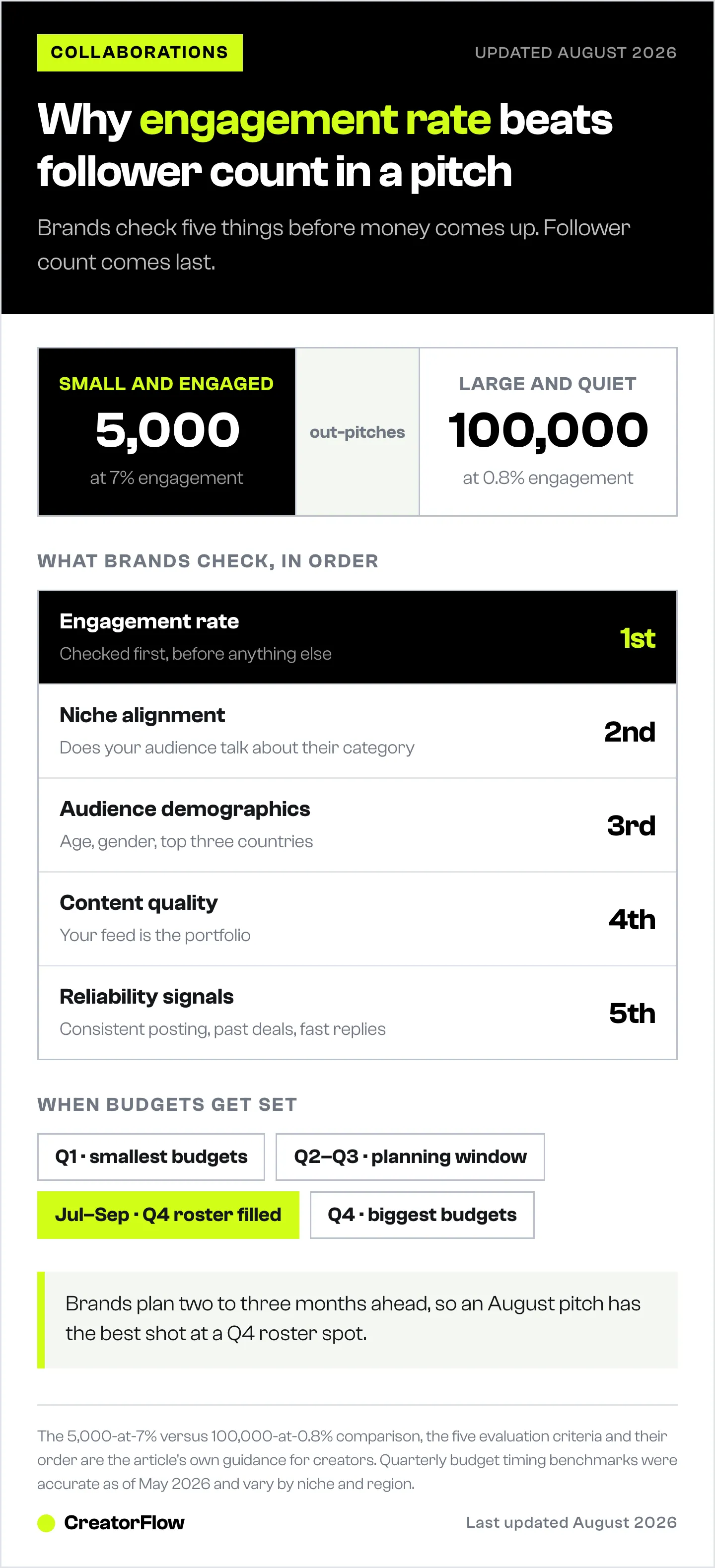
- Engagement rate (checked first). Divide average likes plus comments by followers, times 100. 8,000 followers at 6% beats 80,000 at 0.8%. For ways to lift it, see how to increase Instagram engagement.
- Niche alignment. A protein brand wants fitness creators whose audience talks training and nutrition, not general lifestyle. A tight niche makes you easier to find and easier to justify.
- Audience demographics. A European skincare brand needs a mostly-European audience. Know your age, gender, and top three countries before any conversation.
- Content quality. Your feed is the portfolio. It either looks like work a brand wants attached to its name, or it doesn’t.
- Reliability signals. Consistent posting, past partnerships, and fast replies tell a brand you’ll deliver.
How to Build a Media Kit
A media kit is the first thing a brand asks for, and the thing that loses the deal when it’s missing. Build it before you pitch. Our media kit guide covers the eight sections and a results page brands can’t get from Instagram.
Include:
- Handle and one-line niche description
- Follower count and three-month trend
- Average engagement rate
- Audience demographics (age, gender, top three countries)
- Two or three past collaboration examples with results if you have them
- Content formats you offer (Reels, static, Stories, Live)
- Your rates or a rate range
- A contact email
Keep it to one or two pages. A PDF or Canva link is fine. Brands scanning dozens of pitches a week want the key numbers and examples, not a 15-slide deck.
How to Pitch Instagram Collaborations
- Find brands already paying creators your size. Search your niche for creators with similar follower counts, then check their tagged posts and paid-partnership labels. Those brands have active budgets in your range.
- Find the right contact. For small and mid-size brands, that’s the marketing or social manager. Email beats cold DMs for outreach. Look for a partnerships email on the brand’s site.
- Write a short, specific pitch. One sentence on who you are, one on why their brand fits your audience specifically, a link to your media kit, and a clear next step (a format and rough timeline). Not “let me know if you’re interested.”
- Follow up once after two weeks. One sentence. Two follow-ups reads as desperation.
- Track every outreach. Log brand, contact, date, and status. Without tracking you’ll duplicate pitches and lose sight of which niches respond.
For the deeper pitch-and-pricing playbook, see how to get Instagram brand deals, and if you’re under 10K, brand deals under 10K followers.
Timing: When Brands Allocate Creator Budgets
Most brands plan campaigns two to three months ahead. Q4 (October to December) carries the biggest consumer budgets, and creator selection for it happens between July and September, once annual budgets are confirmed.
Q1 has the smallest discretionary budgets while annual plans get approved. Q2 and Q3 are active planning windows for the back half of the year, worth targeting, especially in fitness, travel, and lifestyle with strong summer cycles. Pitching in August gives you the best shot at landing on a Q4 roster before it fills.
One collab format worth pitching proactively: a co-hosted giveaway, where you and the brand split the prize cost and pool both audiences. The setup, FTC rules, and entry tracking are covered in this guide to brand collab giveaways with DM automation.
When Brands Reach Out to You First
As your content performs, brands start finding you, often by DM rather than email, sometimes as a comment on a post that caught a brand manager’s eye. This is where most creators leak deals: the message gets buried under fan replies and tags, and a partnership sitting unanswered for two days is usually lost.
A fast, professional response signals you run collaborations like a business, which converts inbound interest more reliably than a delayed reply. The fix is an intake system: a way to capture and qualify every collab request the moment it lands. CreatorFlow can route brand inquiries into an instant DM that delivers your media kit and rate range automatically when someone uses a collab keyword, so no opportunity goes cold while you’re offline. The full setup is in our guide on handling Instagram collaboration requests in your DMs.
Start your free trial at creatorflow.so
FAQ
How many followers do I need to get Instagram collaborations?
There’s no minimum. Brands in 2026 regularly work with nano-influencers (1,000 to 10,000 followers) and micro-influencers (10,000 to 100,000) because engagement tends to be higher and audiences more targeted. A 5,000-follower account at 7% engagement in a defined niche out-pitches a 100,000-follower account at 0.8%.
What’s the difference between paid and gifted collaborations?
A paid collaboration is a monetary fee for content. A gifted collaboration is free product in exchange for coverage, with no fee. Many brands open gifted and move to paid after seeing results. Instagram requires the paid partnership label for both.
How do I turn a gifted offer into a paid deal?
Ask directly in your first reply: “Do you have budget for a paid partnership, or is this gifted-only at this stage?” Brands with budget will say so. Accepting gifted while hoping it becomes paid is not a reliable strategy; if a brand only ever offers gifted, it’s not a paid opportunity.
When is the best time to pitch brands?
Q4 campaigns hold the biggest budgets, and creator selection happens July to September. Pitching in August gives you the best chance of landing before the roster fills. Q1 has the smallest active budgets.
What should a media kit include?
Follower count, average engagement rate, audience demographics, your niche, two to three past examples with results, your content formats, rates or a rate range, and a contact email. One to two pages, as a PDF or Canva link.
How do I find brands that work with creators my size?
Search your niche for creators with similar follower counts and check their tagged posts and sponsored labels. The brands there have active budgets in your range. Pitch them with a differentiated angle (a different audience segment, higher engagement, or a format they’re not using).
Disclaimer: Strategies and timing benchmarks were accurate as of May 2026 and vary by niche, region, and brand. Instagram is a trademark of Meta Platforms, Inc. CreatorFlow (CreatorFlow Labs, S.L.) is a Meta Tech Provider and is not affiliated with, endorsed by, or sponsored by Meta Platforms, Inc. Individual results vary.


